
On this page
Alberta holds the marquee Rockies, the dinosaur badlands, cowboy country and the only sales tax in Canada that stops at the federal 5 percent. The mountains are the plan; the useful knowledge is how the passes, the passes you buy, and the public land actually work.
Roads and driving
- 511 Alberta covers conditions and closures; its webcams on Highway 93 and the Trans-Canada are the honest forecast for a mountain day.
- Rural divided highways run 110 km/h. Park roads are lower and enforced, with wildlife as the standing reason.
- Chinooks are the local plot twist: a warm wind swings a winter day 20 degrees and turns packed snow to glare ice by evening.
- The Icefields Parkway is 232 km with one fuel stop, Saskatchewan River Crossing, open in summer only, and long stretches without cell service. Read the guide before driving it.
What it costs
| Cost | Typical | Notes |
|---|---|---|
| Sales tax | 5% | GST only. Gear, fuel and meals are cheapest in Canada here |
| Hotel tax on top | 4% + about 3% | Provincial tourism levy plus a destination marketing fee in the cities |
| Provincial campsite | $26 to $40 a night | Alberta Parks; the Kananaskis and Canmore sites go first |
| Kananaskis Conservation Pass | $15 a day or $90 a year, per vehicle | Required to stop anywhere in Kananaskis Country; enforced |
| National park entry | $12.25 per adult, per day in 2026; youth 17 and under free | Separate from the Kananaskis pass; Banff and Jasper both charge it |
| Fuel | Among the cheapest in Canada | The provincial fuel tax returned in 2024, so the gap narrowed |
Checked August 2026; the Banff and Jasper entry fee checked 2 October 2026. Alberta Parks and Parks Canada publish the current fee schedules.
Fire bans and camping
Alberta Fire Bans is one map for the whole province, covering provincial land, parks and municipalities, graded advisory, restriction or ban. National parks set their own rules on top. Campgrounds book through Alberta Parks. Outside the parks, random camping on public land is free for up to 14 days at a spot; in the busy foothills Public Land Use Zones a public lands camping pass applies, so check the public land camping pages for your area. National park sites run on Parks Canada and its staggered launches, park by park.
Rules and practicalities
| Category | In Alberta |
|---|---|
| Top speed limit | 110 km/h on divided highways, lower and enforced inside the parks |
| Tolls | None anywhere in the province |
| Alcohol | 18, the lowest in Canada. Retail is entirely private, with the widest selection anywhere |
| Cannabis | 18. Private licensed stores, government online sales |
| Time zone | Mountain, with daylight saving |
| Wildlife | Elk in townsites, bears on verges. Stay in the car at a bear jam and keep 30 metres from elk |
| Moraine Lake | Closed to private cars. The Parks Canada shuttle, Roam’s Super Pass with the Lake Connector, a licensed tour, or a Moraine Lake Lodge booking |
| Emergency | 911 province-wide; cell service thins on the Parkway and the eastern slopes |
When to go
| Season | Best for | Watch for |
|---|---|---|
| May to June | Waterfalls, wildlife with young, half the crowds | Snow on high trails, storms on the Icefields Parkway |
| July to August | Every trail open, warm lakes, festival season | Lots full by 8am, rooms booked months out, fire bans |
| September to October | Larch season mid-September, elk rut, golden prairie light | First snow, shuttles winding down |
| November to April | Skiing, ice walks in the canyons, frozen bubbles at Abraham Lake | Parkway closures, deep cold snaps, early dark |
The stops worth planning around
- Banff and Lake Louise: the headline, deservedly (park guide).
- Jasper: Banff's calmer sibling, dark sky preserve included (park guide).
- Kananaskis: the locals' Rockies, nearly Banff scenery at half the density.
- Drumheller: hoodoo badlands and the Royal Tyrrell, one of the world's great dinosaur museums.
- Waterton: where prairie meets mountain with no foothills warning (park guide).
- Writing-on-Stone / Áísínai'pi: sacred sandstone valley on the Milk River, hoodoos and rock art.
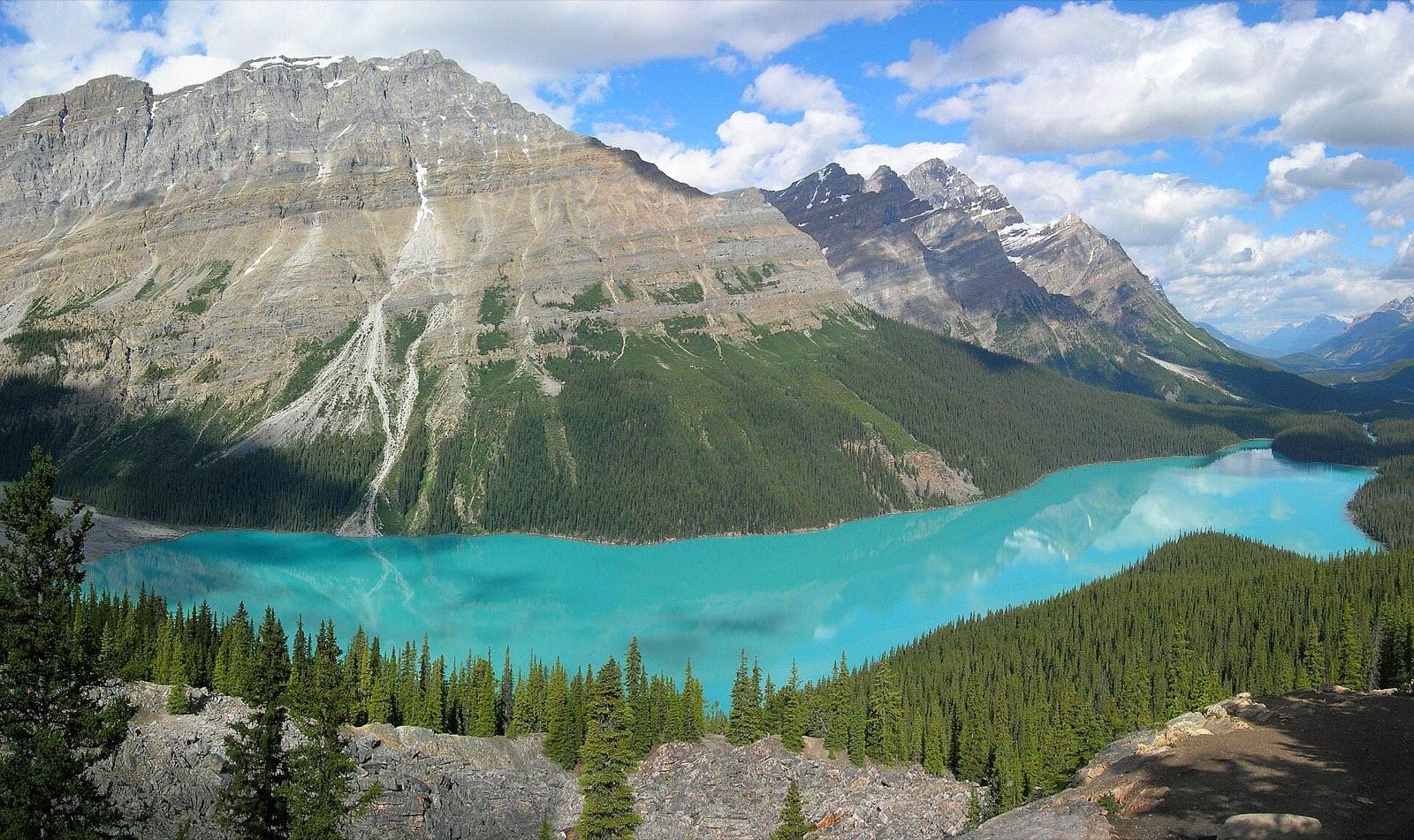
Location: Peyto Lake, Icefields Parkway
Location: Drumheller and the badlands
The official pages
- 511 Alberta Road conditions, closures and mountain webcams. https://511.alberta.ca
- Alberta Fire Bans The province-wide fire ban map. https://www.albertafirebans.ca
- Alberta Parks reservations Provincial campground bookings. https://reserve.albertaparks.ca
- Kananaskis Conservation Pass The per-vehicle pass Kananaskis Country requires. https://www.alberta.ca/kananaskis-conservation-pass
- Public land camping Random camping rules and the zones where a pass applies. https://www.alberta.ca/camping-on-public-land
- Travel Alberta The provincial tourism site. https://www.travelalberta.com
Common questions
- Does Alberta have a provincial sales tax?
- No. Alberta charges only the 5 percent federal GST on most purchases, the lowest sales tax in Canada, which makes it the cheapest province to buy gear, fuel and restaurant meals. Hotels add a 4 percent tourism levy on the room rate.
- Do I need a pass for Kananaskis?
- Yes, the Kananaskis Conservation Pass, bought online per vehicle before or on the day you visit, is required for stopping anywhere in Kananaskis Country and the Bow Valley corridor. It is separate from Parks Canada passes, which cover the national parks next door.
- Can you camp anywhere on public land in Alberta?
- On much of the province's public land, yes: random camping is free for up to 14 days at one location, packed in and packed out. In the busy foothills Public Land Use Zones a public lands camping pass is required and some corridors are day-use only, so check the area rules first.
- How do you get to Moraine Lake now?
- Private vehicles are banned from the Moraine Lake road year round. Access is by the Parks Canada shuttle from the Lake Louise park-and-ride, a licensed commercial bus, a bicycle or your feet, and the shuttle seats are released in batches that go quickly in summer.
Tip
The Icefields Parkway guide covers the Banff to Jasper day properly: fuel, pass checks, and the stops in order.