
On this page
Nunavut is a fifth of Canada's landmass with no highways between its 25 communities: every trip moves by plane, boat, snowmobile or dog team, and every good trip runs through Inuit knowledge, usually as a licensed local operator. Nobody arrives by accident.
How moving around actually works
- Scheduled jets reach Iqaluit daily from Ottawa and Montreal, and regional turboprops fan out from there. Fares are high and weather delays are structural, so build buffer days around every connection.
- Within a community everything is walkable or a short taxi. Between communities there is no surface option a visitor should improvise.
- Land travel means a local operator. The sea ice, the weather and the bears are all managed knowledge, and hiring Inuit guides is both the safety system and where the trip's meaning concentrates.
- Much of the land around communities is Inuit-owned, and travelling on it needs permission through the regional Inuit association, which organised tours handle for you.
- Travel insurance with medical evacuation cover is not optional here. The nearest hospital may be a jet away.
What it costs
| Cost | Typical | Notes |
|---|---|---|
| Sales tax | 5% | GST only, and no accommodation levy |
| Return flight from Ottawa to Iqaluit | Often $1,500 to $2,500 | More than many transatlantic fares; seat sales exist and go fast |
| Hotel room | $250 to $400 a night | Rooms are limited and rarely discounted |
| Groceries | Two to three times southern prices | A jug of milk or a bag of apples is a genuine shock |
| Guided multi-day trip | Several thousand dollars | Floe edge and Auyuittuq trips are outfitted and priced accordingly |
| Medical evacuation without insurance | Five figures | This is the line that makes insurance non-negotiable |
Checked August 2026. Airlines and operators publish current pricing; treat these as planning ranges, not quotes.
Parks and safety
Nunavut's national parks (Auyuittuq, Sirmilik, Quttinirpaaq, Ukkusiksalik) all require registration and an orientation with Parks Canada before entry, covering polar bear safety, river crossings and the rescue realities of a place with no road out. Nunavut's territorial parks, including Sylvia Grinnell and Qaummaarviit beside Iqaluit, are the accessible first taste. Polar bears are a coastal fact of life across the whole territory, and guides carry the deterrents and the judgment.
Rules and practicalities
| Category | In Nunavut |
|---|---|
| Roads | None between communities. Local roads only, and no car rental worth the name |
| Time zones | Eastern on Baffin, Central in the Kivalliq, Mountain in the Kitikmeot |
| Alcohol | 19, and heavily restricted. Many communities are dry or run a permit system; check before packing any |
| Cannabis | 19. Ordered online through the territorial retailer |
| Emergency | No 911 in most communities. Save the local RCMP, health centre and fire numbers on arrival |
| Land access | Much of the land is Inuit-owned. Permission comes through the regional Inuit association |
| Polar bears | A live risk at every coastal community. Do not walk out of town without a guide |
| Insurance | Medical evacuation cover is the single most important booking you make |
When to go
| Season | Best for | Watch for |
|---|---|---|
| May to June | The floe edge: narwhal, belugas, seabirds, bears, 24-hour light | Trips book a year ahead and ice conditions rule the schedule |
| July to August | Hiking, Auyuittuq, boat travel, community festivals | The season is short and weather cancels flights routinely |
| September to October | Fall tundra colour, aurora returning, quieter communities | Freeze-up limits boat travel, cold arrives quickly |
| November to April | Aurora, snowmobile and dog-team travel, carving studios | Deep cold and darkness; travel is guided or not at all |
The experiences worth building a trip around
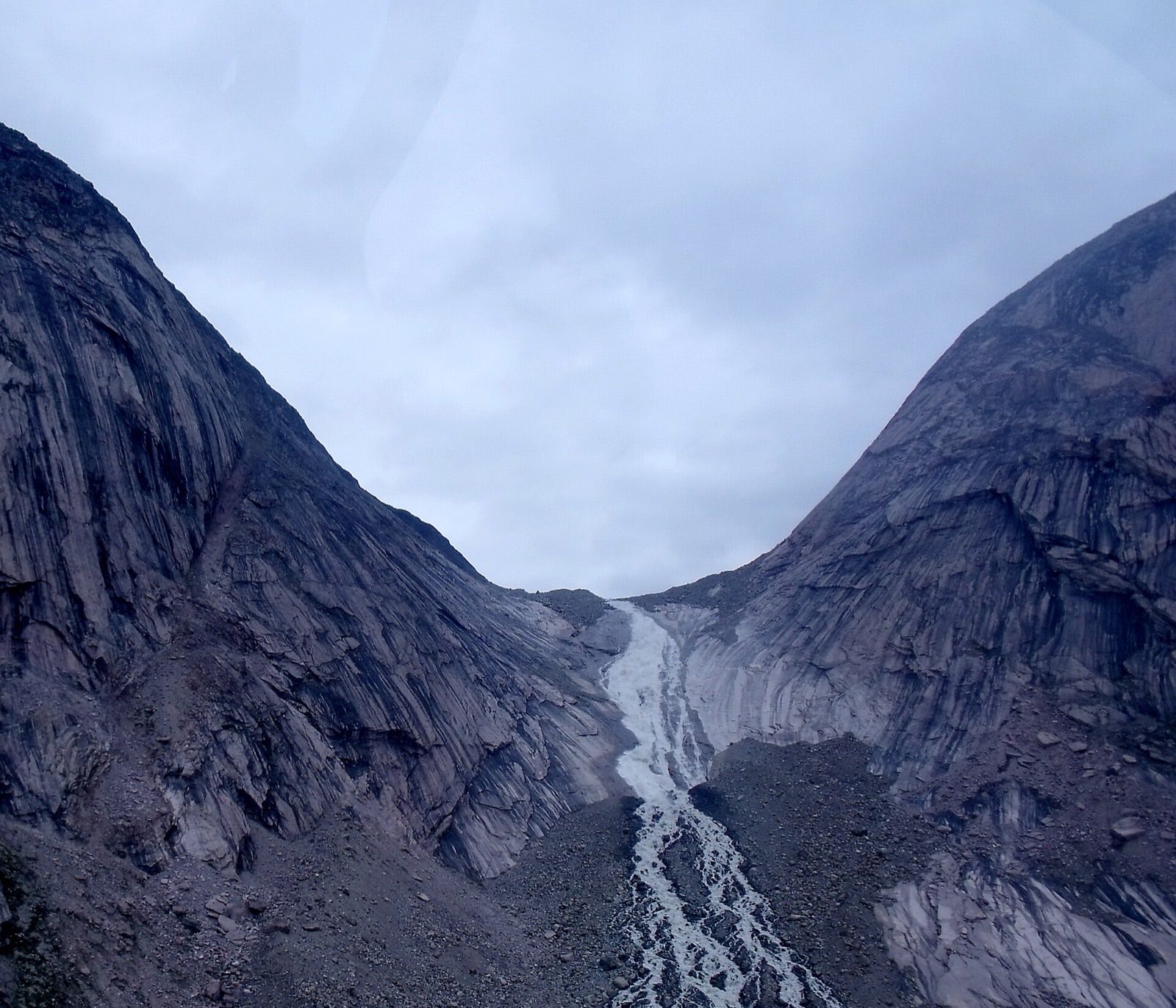
- Auyuittuq: trekking Akshayuk Pass beneath Thor's kilometre of overhanging granite, staged from Pangnirtung.
- The floe edge: in May and June near Pond Inlet or Arctic Bay, where the ice meets open water and everything arrives at once.
- Iqaluit: the capital as introduction, with country food on menus, the museum's carvings and tundra walks out the back door.
- Pangnirtung: the fjord-side art community whose prints hang in national galleries, and the gateway to Auyuittuq.
- Kimmirut and the south Baffin coast: boat trips through iceberg water to a community of carvers.
- Qaummaarviit: a 750-year-old Thule site reachable by boat from Iqaluit, sod houses and whalebone rafters intact.
Location: Iqaluit, Baffin Island
Location: Pangnirtung, gateway to Auyuittuq
The official pages
- Nunavut Parks Territorial parks, including the Iqaluit-area day trips. https://nunavutparks.com
- Parks Canada in Nunavut The national parks and their required orientations. https://parks.canada.ca
- Travel Nunavut Licensed operators and trip planning, the essential directory. https://travelnunavut.ca
- Canadian North The airline network connecting the territory. https://www.canadiannorth.com
Common questions
- Can you drive to Nunavut?
- No. Nunavut has no road connection to the rest of Canada and no highways between its communities, so access is by air year-round plus summer cruise and expedition vessels. Within communities there are local roads, and between them travel happens by plane, boat or, in season, snowmobile with guides.
- How expensive is a trip to Nunavut?
- It is Canada's most expensive destination: flights from southern Canada often cost more than a transatlantic fare, hotel rooms run 250 to 400 dollars a night, and guided experiences reflect real logistics. Most visitors treat it as a once-in-a-lifetime trip in the several-thousand-dollar range and book through operators.
- Can you bring alcohol into Nunavut?
- Not freely. Alcohol is restricted across the territory and rules are set community by community: some are entirely dry, some run a permit and quota system, and a few allow limited sales. Check the rules for every community on your itinerary before travelling, because the penalties are real.
- Do you need a guide to visit Auyuittuq National Park?
- A guide is not legally required for the park itself, but everyone must register and complete Parks Canada's orientation, and the approach up the fjord from Pangnirtung needs a local boat operator regardless. Independent trekkers need genuine Arctic experience, and most visitors are happier and safer with an outfitted trip.
Tip
Weather rules everything here, so changeable fares and proper insurance are not pessimism, they are how the Arctic is done. The documents vault keeps policies and confirmations reachable offline.