
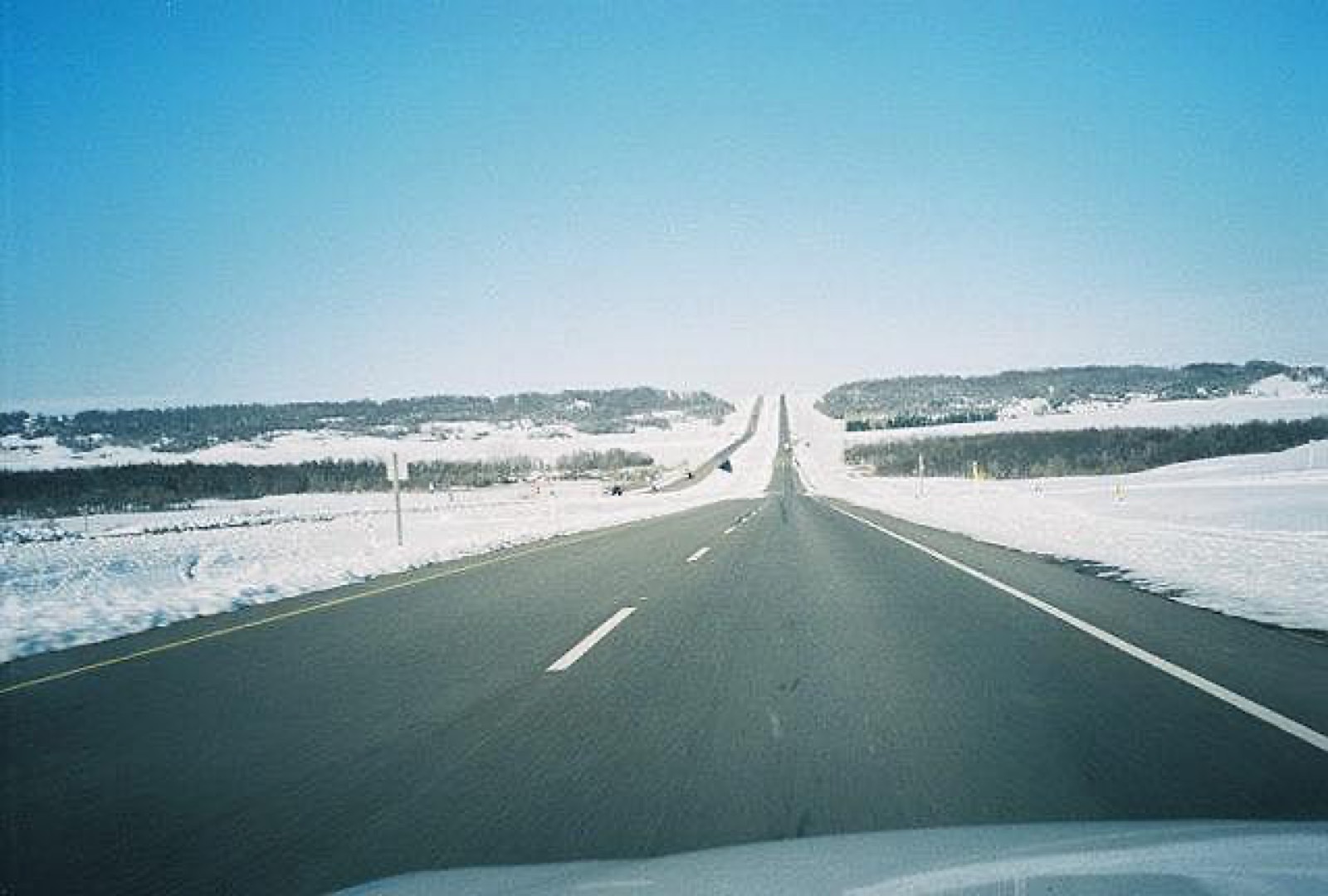
Canadian winter driving is not a heroic skill, it is a planning habit. The country moves all winter: ski hills, holiday visits, whole northern towns that only connect by winter road. The drivers who do it calmly all do the same three things. They put real winter tires on, they carry a kit they hope to never open, and they treat the forecast as a schedule, not a suggestion.
Tires first, everything else second
- Quebec makes winter tires law for the winter months, roughly December through mid March, and rentals in the province come equipped.
- British Columbia requires winter tires or chains on most highways outside the south coast from fall through spring; routes are signed and checked (BC guide).
- Everywhere else they are merely the difference between a stop and a story. All-seasons below about minus seven are the wrong tool regardless of what the law says.
- The mountain-snowflake symbol on the sidewall is the real standard; M+S alone is the minimum, not the goal.
The trunk kit
- Shovel, traction aid (a bag of sand or traction boards), and a proper snow brush with a scraper.
- Booster cables or a jump pack. Cold kills batteries on schedule.
- Blanket or sleeping bag, toque and mitts, candle and matches, water and calorie-dense snacks.
- A charged phone bank, and paper directions for the dead zones.
- Windshield washer rated for deep cold, topped up before every long day. You will use more than seems possible.
Plan around storms, not through them
The real skill is the day before: watch the Environment Canada forecast, check the province's 511 road report at breakfast, and be willing to move a driving day. Most winter road misery is people keeping a schedule a storm had already cancelled. If you do get caught in a whiteout, slow until your sightline is your stopping distance, use the painted line not the taillights ahead, and never stop in a live lane. On ice, smoothness is the whole doctrine: gentle throttle, gentle brakes, gentle steering, huge gaps.
The two tabs to keep open
Common questions
- Are winter tires mandatory in Canada?
- In Quebec, yes, during the winter months. In British Columbia they are required on most highways outside the south coast from fall to spring. In the rest of the country they are optional and strongly recommended; insurers and every winter driver treat them as standard equipment.
- What should be in a winter driving emergency kit?
- A shovel, traction aid, snow brush, booster cables, a blanket, warm hat and mitts, candle and matches, water, snacks, a phone power bank and cold-rated washer fluid. It fits in one bin and matters most on rural and northern routes.
- Is it safe to drive across Canada in winter?
- Yes, with slack in the schedule. The Trans-Canada is plowed and travelled all winter, but storms will close sections a few times a season, and the safe plan is waiting a day rather than pushing through. Mountain passes and the Lake Superior stretch deserve the most respect.
Tip
Winter distances lie. A summer six-hour day is a winter eight-hour day; planning days shorter is cheaper than learning that at dusk on an unlit two-lane.