
On this page
Leave No Trace is not about being pure. It is about the fact that a beautiful spot visited by four people a year survives almost anything, and the same spot visited by four hundred does not. Nearly every rule is arithmetic rather than morality.
The seven, briefly
- Plan ahead. Most damage is done by unprepared people improvising.
- Travel and camp on durable surfaces. Rock, gravel, established trail and existing sites.
- Dispose of waste properly. Everything you brought comes back out, including food scraps. Leave no trace applies to compost.
- Leave what you find. Rocks, antlers, flowers and artefacts stay.
- Minimise campfire impacts. Use existing rings, or a stove instead.
- Respect wildlife. Watch from distance, never feed, store food properly.
- Be considerate of others. Sound carries much further outdoors than people think.
The two everyone gets wrong
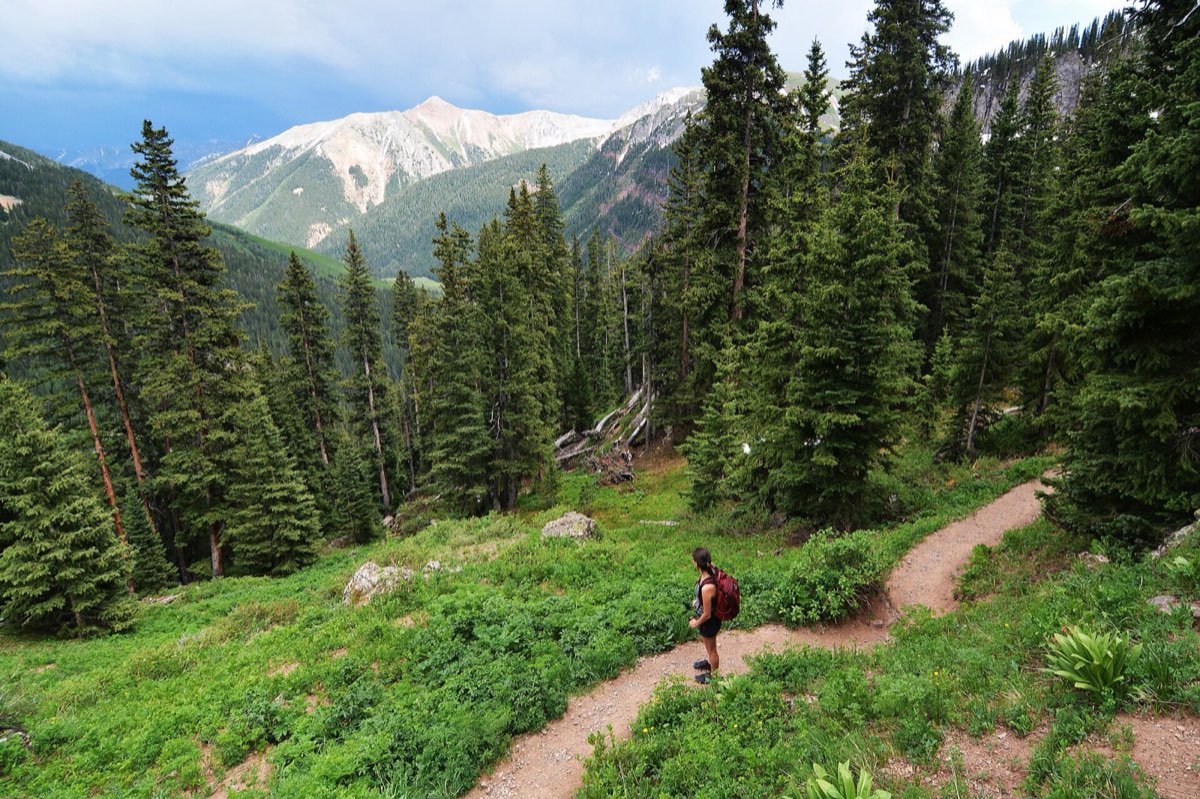
Walking around the mud, not through it. A trail widens into a scar because a hundred people each stepped a foot to the side of a puddle. Boots dry. Meadows take decades. Walk straight through the middle, and buy waterproof boots so you are willing to.
Food scraps count as litter. An apple core takes months, orange peel takes years, and both teach animals to associate trails with food. Pack it out.
Going to the toilet outdoors
- 1 Get at least 70 metres, roughly 70 adult paces, from any water, trail or campsite.
- 2 Dig a hole 15 to 20 centimetres deep in living soil, not sand or gravel.
- 3 Afterwards, fill it in and disguise the spot.
- 4 Pack out toilet paper in a sealed bag. Buried paper gets dug up by animals and lasts a surprisingly long time.
- 5 In alpine, desert and canyon areas, and on many popular rivers, pack out solid waste too. A wag bag is standard issue and parks will often supply one.
Cairns, stacked rocks and the rest
Do not build rock stacks. Official cairns mark routes above the treeline and adding decorative ones has genuinely led hikers off cliffs. Moving rocks also destroys the habitat underneath them. Leave the rocks alone.
Learn more
Common questions
- What are the seven Leave No Trace principles?
- Plan ahead, travel and camp on durable surfaces, dispose of waste properly, leave what you find, minimise campfire impacts, respect wildlife, and be considerate of others.
- Should you walk through mud on a trail or around it?
- Straight through. Walking around widens the trail permanently, which is far more damage than muddy boots.
- Is it okay to leave apple cores or orange peel on a trail?
- No. They take months to years to break down and they teach wildlife to associate people and trails with food.
- How far from water should you go to the toilet outdoors?
- At least 70 metres, in a hole 15 to 20 centimetres deep, with toilet paper packed out. Some areas require packing out solid waste entirely.
Tip
If you take one thing from this page, make it the mud rule. It is the most common and most permanent damage that well-meaning walkers do.