
On this page
Bear attacks are rare and bear encounters are not. Almost every bad outcome traces back to the same root cause: a bear that learned humans mean food. Store food properly and you are protecting the bear at least as much as yourself, because a habituated bear is usually a destroyed bear.
Food storage, which is the whole game
- Everything with a scent goes in storage, not just food. Toothpaste, sunscreen, lip balm, rubbish, the clothes you cooked in, dog food.
- Use the metal locker at the campsite if there is one. That is what it is for.
- In the backcountry, use an approved bear canister where required, and many parks now require one specifically rather than accepting a hang.
- If hanging is permitted, get it at least 4 metres up and 2 metres out from the trunk. A poorly hung bag is a piñata. Bears climb trees, so make sure it is hard for them to access.
- Cook and eat well away from where you sleep, ideally 70 metres or more, and never eat in the tent.
Bear spray
Bear spray is far more effective than a firearm in documented encounters, and it is what park staff carry. It only works if it is on your body.
- 1 Carry it on a hip or chest holster, never inside the pack. You will not have time to take a pack off.
- 2 Practice the draw and the safety clip at home until it is automatic.
- 3 Deploy at around 8 metres, aiming slightly downward so the bear runs into the cloud.
- 4 Spray in short bursts and be ready to keep going. Then leave the area, because the residue can actually attract bears later.
- 5 Check the expiry date, and remember you cannot fly with it. Buy or rent at your destination.
If you meet one
- Do not run. Running triggers a chase response, you are not faster than a bear.
- Identify it if you can. Black bears have no shoulder hump and a straight face profile. Grizzlies have a pronounced shoulder hump and a dished face.
- Talk calmly, look large, back away slowly. Most encounters end here.
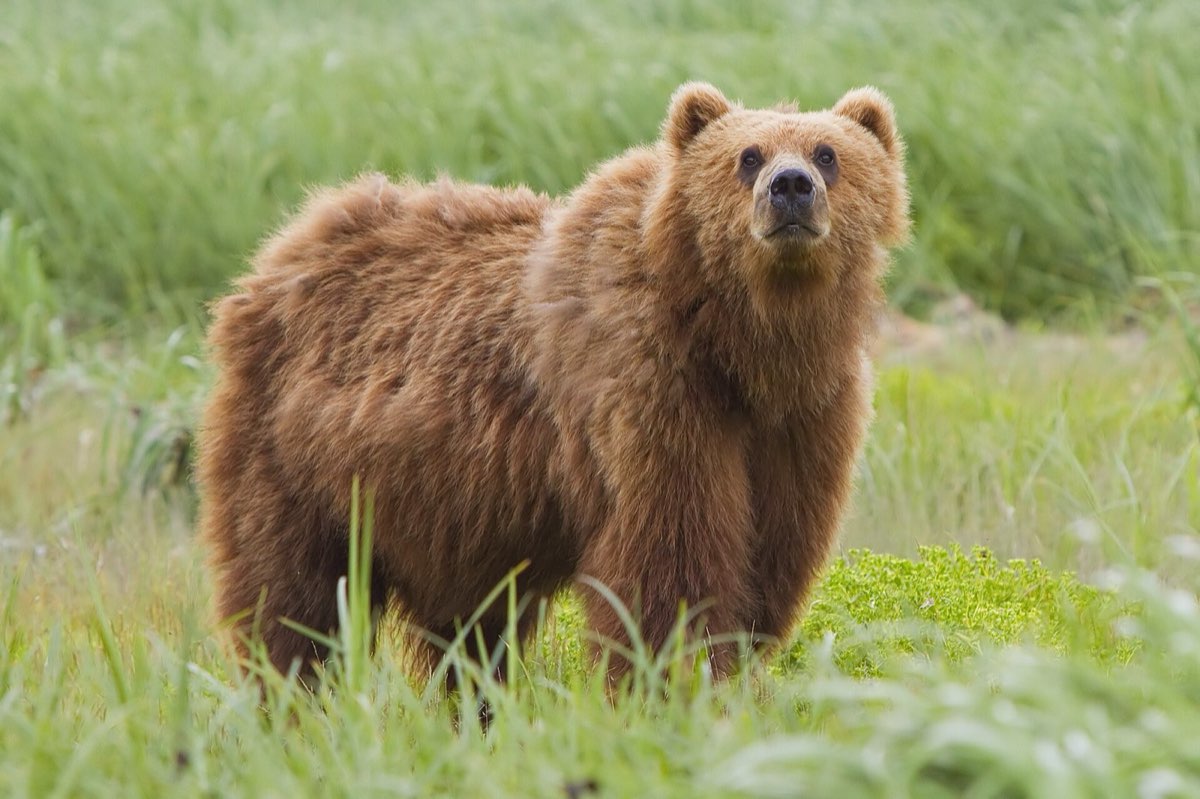
- A standing bear is curious, not aggressive. It is trying to see and smell you better.
- If a grizzly makes contact, play dead: face down, hands behind the neck, legs apart, pack on. Stay down until it is well gone.
- If a black bear attacks, or any bear enters your tent at night, fight back. That is predatory behaviour and it is the one case where playing dead is wrong.
- Never get between a mother and her cubs, and never approach for a photograph.
Things people believe that are not right
- Bear bells do not work well. Your voice does, especially near loud water and on blind corners.
- Bears are not only a dawn and dusk problem. They forage all day.
- Playing dead is not universal advice. It is for defensive grizzly contact only.
- A car is storage, but a soft-top or a car with food visible is not. Many parks require a hard locker regardless.
Official guidance
Common questions
- What should you do if you see a bear?
- Do not run. Speak calmly, make yourself look large, and back away slowly while watching it. Most encounters end with the bear leaving.
- Is bear spray effective?
- Yes. Studies of documented encounters find it more effective at preventing injury than a firearm. It has to be carried accessibly on your body to be any use.
- Should you play dead if a bear attacks?
- Only for a defensive grizzly attack, typically a surprised mother. For a black bear attack, or any bear that enters your tent, fight back as hard as you can.
- What food do you need to store in bear country?
- Anything with a scent: all food, rubbish, toiletries, sunscreen, pet food and the clothes you cooked in. Use the campsite locker or an approved canister.
Tip
Glacier, Yellowstone, Banff and Jasper are all serious bear country. Read the park's current storage rule, because it varies and it is enforced.