
On this page
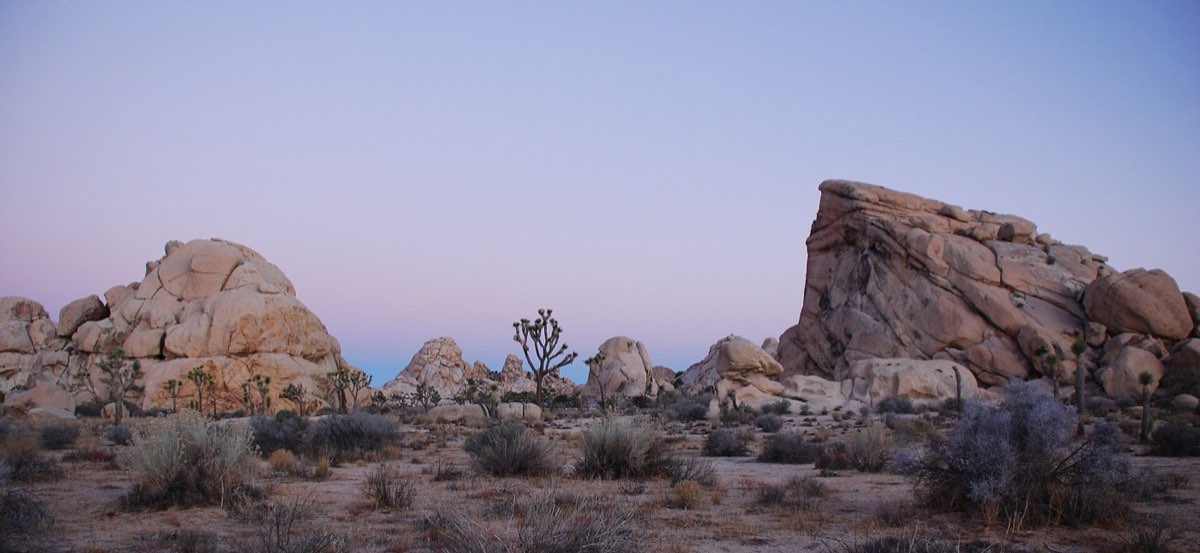
Joshua Tree sits where the high Mojave meets the low Colorado desert, which is why the vegetation changes completely as you drive south through it. It is close enough to Los Angeles for a weekend, small enough to see properly in two days, and dark enough at night to be a certified International Dark Sky Park.
Entrances and getting there
- West Entrance (Joshua Tree village): the busiest gate and the longest line, often 45 minutes by mid-morning in season.
- North Entrance (Twentynine Palms): usually a much shorter queue, near the Oasis Visitor Center.
- South Entrance (Cottonwood, off I-10): the way in from Palm Springs and the Coachella Valley.
- The park road runs gate to gate, so entering at the West and leaving at Cottonwood turns a visit into a one-way drive through both deserts.
Go in the cool half of the year
Summer here runs well past 100 degrees Fahrenheit and the park becomes genuinely hostile. October to April is the season: warm days, cold nights, and wildflowers in March in a good year. Nights drop near freezing in winter, which surprises campers who packed for a desert.
There is no water in the park
This is the single most important practical fact. There are only a handful of water sources, all near entrances and visitor centres, and none on the trails. Bring at least a gallon per person per day and fill up before you drive in. Fuel is also outside the park.
Location: Joshua Tree National Park
What to do
- Hidden Valley: a one mile loop inside a rock-enclosed bowl. The best short introduction to the park.
- Barker Dam: an easy loop past a cattle rancher's dam and some petroglyphs, with water after rain.
- Keys View: a road-accessible overlook down onto the Coachella Valley and the San Andreas Fault. Sunset here is the move.
- Cholla Cactus Garden: dense, strange and lit beautifully at either end of the day. Do not touch the cholla, ever.
- Ryan Mountain: three miles round trip, 1,000 feet up, the best panorama in the park.
- Bouldering and climbing: over 8,000 routes. Even if you do not climb, watching at Hidden Valley is entertaining.
Stargazing
Sky quality here is exceptional by southern California standards. Aim for a new moon, let your eyes adjust for 20 minutes without looking at a phone, and pull off at any of the wide roadside lots. The Milky Way is visible to the naked eye from spring through autumn.
Book it and check it
- Official park page Entrance fees, opening hours, park maps and seasonal road status. https://www.nps.gov/jotr/index.htm
- Current conditions and alerts Road, trail and weather status. Read this the morning you go. https://www.nps.gov/jotr/planyourvisit/conditions.htm
- Recreation.gov Campsites, timed entry and permits for most federal land. https://www.recreation.gov
- Campground reservations Most Joshua Tree campgrounds are now reservation-only in season. https://www.recreation.gov/camping/gateways/2782
Common questions
- How many days do you need in Joshua Tree?
- Two is comfortable: one for the northern rock formations and one for Keys View, the cholla garden and a longer hike. One day covers the highlights if you start early.
- Is there water in Joshua Tree National Park?
- Almost none. A few taps exist at entrances and visitor centres, and there is none on the trails. Carry a gallon per person per day.
- When do wildflowers bloom in Joshua Tree?
- Usually March into early April at lower elevations, later higher up, and only after a wet winter. Some years there is barely a bloom at all.
- Can you visit Joshua Tree in summer?
- You can, but daytime highs well over 100 degrees make hiking dangerous. Restrict yourself to dawn, dusk and the car, or come between October and April.
Tip
Cell coverage inside the park is essentially nil. Download offline maps before you drive through the entrance, not after.